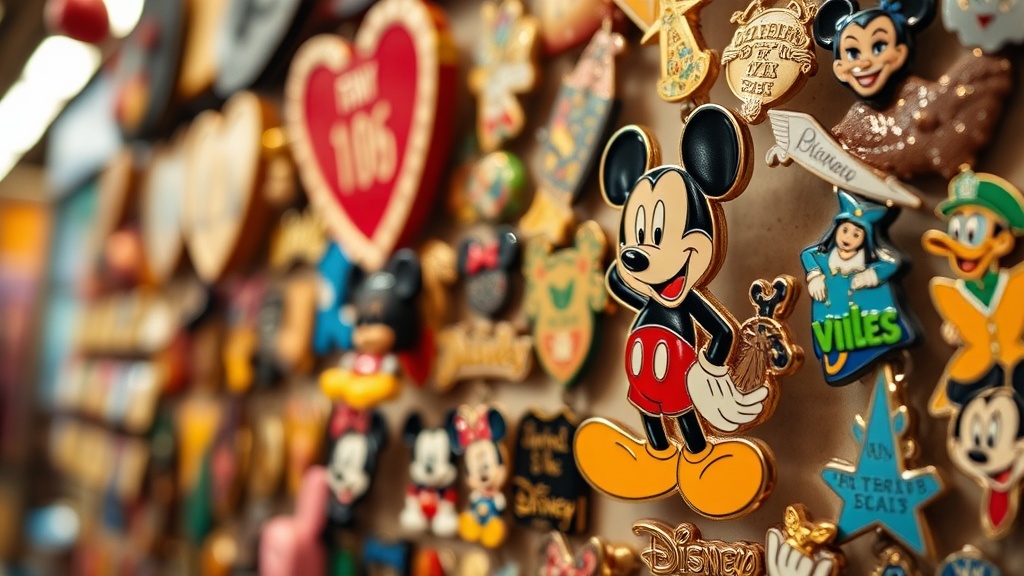
Finding High-Value Disney Pins at Thrift Stores and Estate Sales

What to Look for When Hunting for Disney Pins in the Wild
You'll learn exactly how to identify profitable Disney pins while browsing local thrift shops, yard sales, and estate sales. Finding a hidden gem among common household items requires a sharp eye and a specific set of diagnostic skills. This isn't just about luck; it's about knowing what a high-value piece looks like before you even reach for it.
Most casual shoppers walk right past a potential treasure because they're looking for shiny, brand-new items. However, the real profit is often tucked away in a bin of old jewelry or a box of junked craft supplies. You aren't looking for the standard, mass-produced pins found in souvenir shops. You're looking for the pieces that collectors actually crave—the ones with heavy metal, intricate textures, and specific markings.
<Before you head out, keep a digital copy of a pin database or a high-resolution image gallery on your phone. When you find something that looks interesting, you'll need to verify it immediately. A pin might look like a common Mickey, but the weight and the backstamp tell the real story. If it feels heavy and has a complex back design, you might have found something worth more than the few cents the thrift store is asking.
How Do I Know if a Disney Pin is Authentic?
Authenticity is the biggest hurdle for a secondary market collector. A common mistake is assuming that any pin with a Disney logo is a legitimate piece. Many "bootleg" pins circulate in the thrift scene, and they can look deceptively similar to the untrained eye. To determine if a pin is legitimate, look at the backstamp first. Authentic Disney pins almost always have a clean, crisp manufacturer mark (like Disney, Disney Parks, or a specific studio name) and a metal backing that feels substantial.
Check the weight. Counterfeit pins often feel light or hollow. If you pick up a pin and it feels like cheap plastic or thin tin, move on. Real Disney pins—especially the limited editions or high-end pieces—have a certain heft to them. The enamel should also be smooth. If the colored sections are uneven, pitted, or have air bubbles, you're likely looking at a low-quality reproduction rather than an official release. You can check more about official production standards at the official Disney Pin Trading resources to see how legitimate pieces are structured.
One way to verify is to look at the metal edges. High-quality pins have smooth, finished edges. If you see rough metal or jagged edges around the perimeter, it's a red flag. Also, look for the presence of a rubber or metal pin clutch on the back. While not every pin comes with its original back, the presence of a high-quality, branded back can be a telltale sign of an original release.
Where Are the Best Places to Find Rare Disney Pins?
While everyone knows the Disney Parks are the primary source, the real hunt happens in the local community. Estate sales are a goldmine for collectors who have the patience to dig. When a lifelong collector passes away, their inventory often ends up in an estate sale. These collections are frequently undervalued because the sale organizers are looking for furniture or old tools, not a specific 2004 Limited Edition Star Wars pin. It's a way to get items at a fraction of their market value.
Thrift stores and secondhand shops (like Goodwill or local charity shops) are also excellent, but you have to be proactive. Don't just look in the toy aisle. Check the jewelry section, the craft bins, and even the "miscellaneous" boxes. Many people donate Disney pins thinking they are just cheap trinkets, not realizing the collector value behind them. If you see a box of assorted pins, don't be afraid to ask the clerk if you can look through them—sometimes they have a policy against it, but most are happy to help if you're polite.
Online marketplaces are another option, but they require a different strategy. On sites like eBay or even specialized Facebook groups, you're competing with professional resellers. To succeed here, you need to look for "unsearched" listings. This means looking for sellers who describe their items poorly—for example, a seller listing an item as "old Disney toy" instead of "Limited Edition Disney Pin." These sellers often don't know what they have, which is where you can find a deal.
How Much Should I Pay for a Disney Pin?
Pricing is a moving target. A pin's value is determined by rarity, demand, and condition. A common "open edition" pin might only be worth a few dollars, while a rare, limited-edition piece could fetch hundreds. Before you buy, you must understand the difference between these categories. An open edition is meant for mass distribution, while a limited edition is restricted in number. If you're buying to flip or to grow a high-value collection, you should focus on the latter.
| Pin Type | Typical Value Range | Collector Interest | |
|---|---|---|---|
| Open Edition | $5 - $15 | Low/Moderate | Commonly found in gift shops. |
| Limited Edition | $30 - $150 | High | Highly sought after by serious collectors. |
| Limited Release | $100+ | Very High | Rare and often highly collectible. |
Always check the "sold" listings on eBay rather than the "asking" prices. The asking price is just a wish; the sold price is the reality. If you see a pin listed for $50, but the last five sold for $10, you know the seller is overpricing it. This is a vital step in ensuring you don't overpay for your finds. For more data on market trends, you can often find community discussions on collector forums that track recent sales data.
What Are the Best Practices for Cleaning Found Pins?
If you find a pin at a thrift store, it might arrive with a bit of grime or oxidation. Don't panic; you can usually restore it with minimal effort. Never use harsh chemicals or abrasives, as this will ruin the enamel and the metal finish. A soft, lint-free cloth and a tiny bit of warm water with a drop of mild dish soap is usually enough to clean a surface. If there is stubborn dirt in the crevices, use a very soft toothbrush—not a hard one—to gently lift the debris.
If the pin has some oxidation on the metal, you can use a specialized jewelry polishing cloth. Avoid using liquid metal polish directly on the pin, as it can seep into the enamel and cause discoloration. The goal is to be as gentle as possible. Most of the time, a simple wipe-down is all a well-kept pin needs to look brand new. Once cleaned, store your finds in a way that prevents further tarnishing—either in a pin book or a padded display case—to preserve the work you've done.
- Use a soft cloth for surface cleaning.
- Avoid abrasive materials.
- Keep pins in a dry, humidity-controlled environment.
- Always inspect the backstamp before purchasing.